Strength training

The Best Footwear for Strength Training
Running shoes
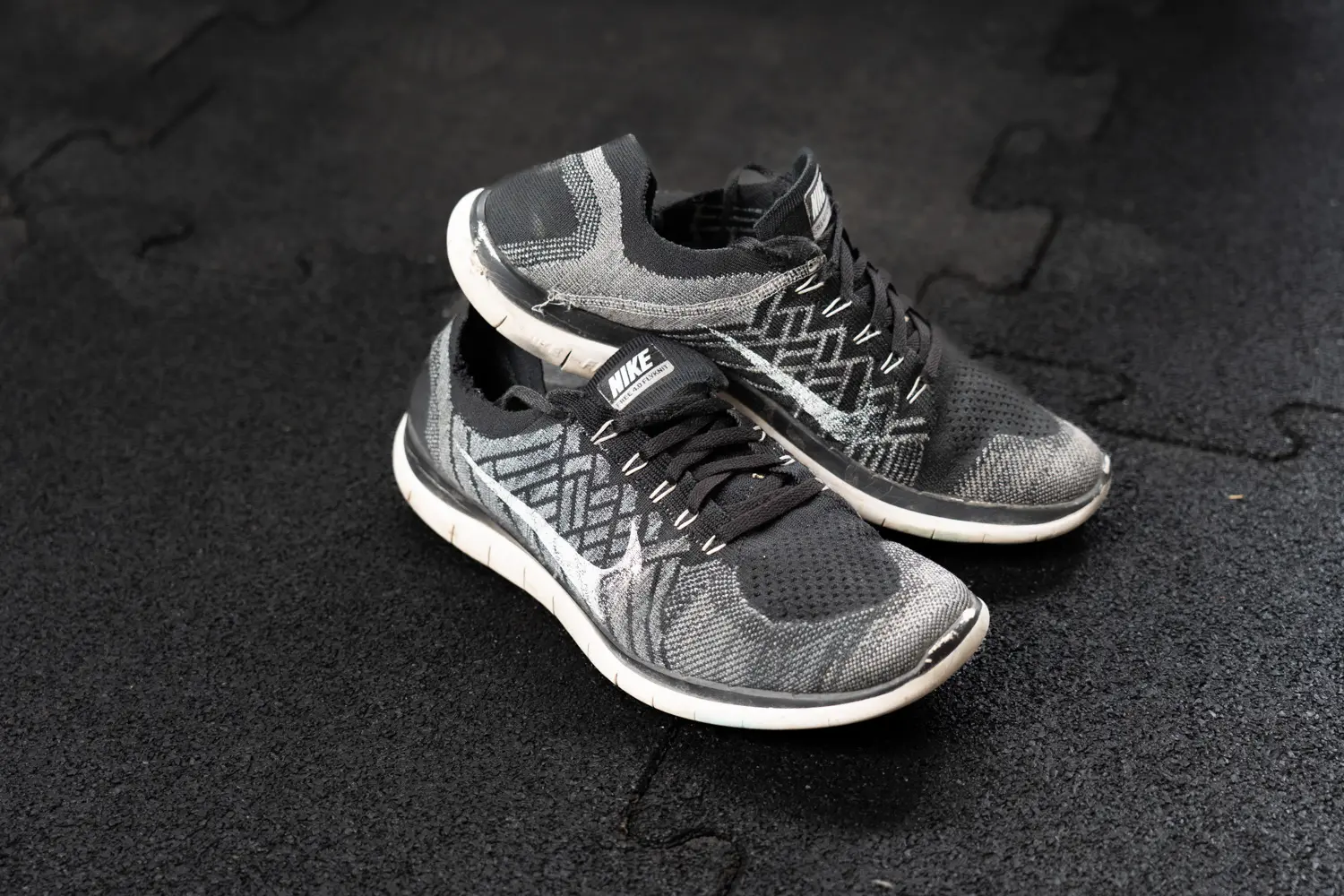
Running shoes are designed for running and have a thick sole to cushion the impact with the ground. However, this is counterproductive for strength training, as the goal of strength training is to lift weights, and a stable and firm stance is advantageous for this. A sole that is too heavily cushioned can compromise stability and make it harder to lift weight. Cushioned shoes can lead to pronation more easily during squats for many people, meaning the foot rolls inward at the ankle, causing the knee to no longer point towards the toes, resulting in a suboptimal physiological leg axis.
Of all the variants Running shoes the worst alternative for heavy strength training such as squats. By the way, most fitness shoes have the same problem. These can therefore be put into the same category. The only advantage of running or fitness shoes for squats is the usually raised heel, which allows for increased knee forward movement and thus a more upright torso. However, this can also be easily achieved with wedges, e.g., weight plates, without a soft surface.
Shoes with a flat, unpadded sole
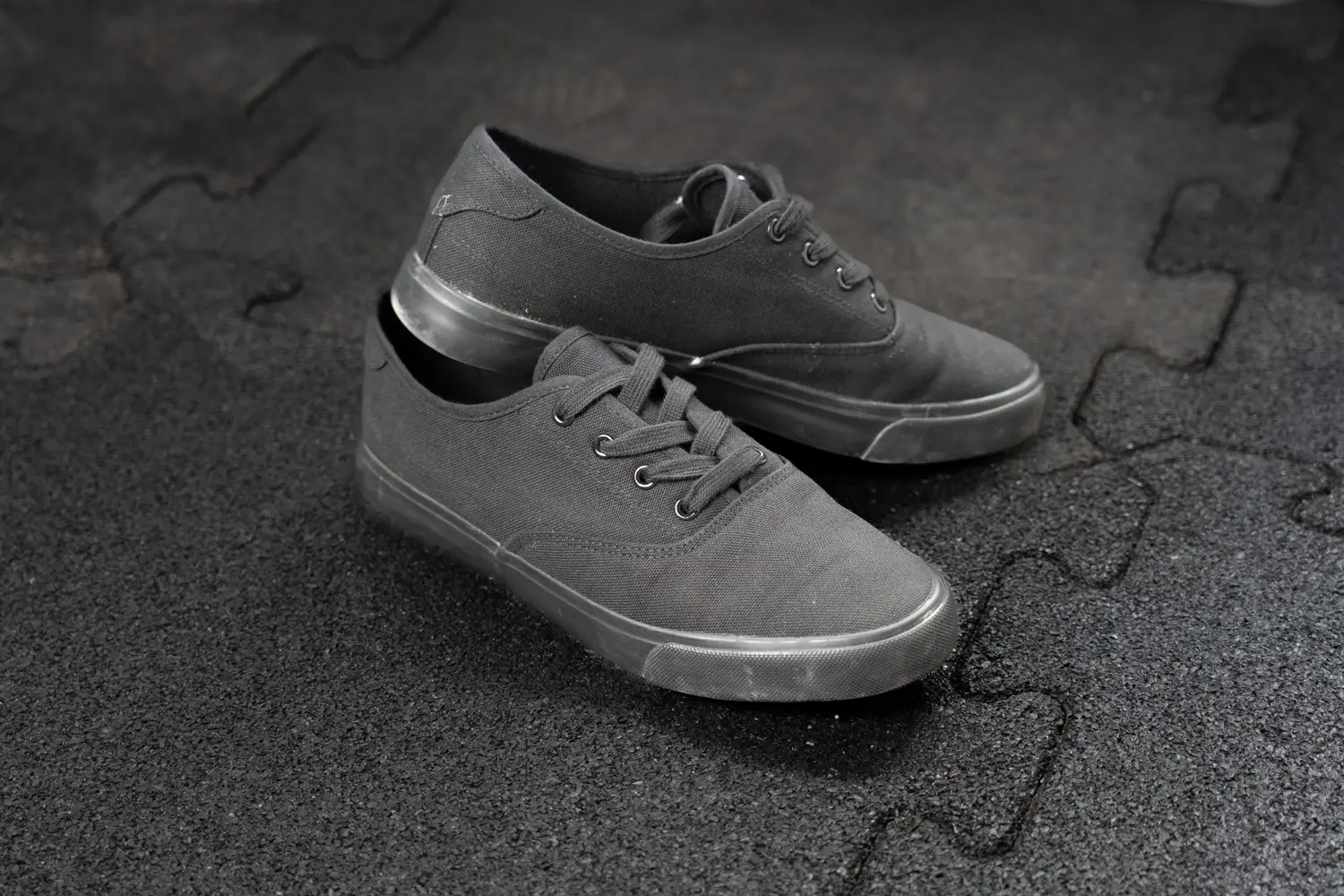
A significantly better choice for strength training in general and for squats in particular are shoes with a flat, un-cushioned sole, such as Converse. Due to the relatively thin sole, they allow for a much better stance than typical fitness shoes. Many old-school bodybuilders wear these types of shoes.
Shoes used in martial arts, which are often seen in gyms, also belong in this category. One potential disadvantage of these shoes might be that they don't allow enough ankle mobility, thus restricting knee drive. However, it's best to just try them out.
Barefoot shoes
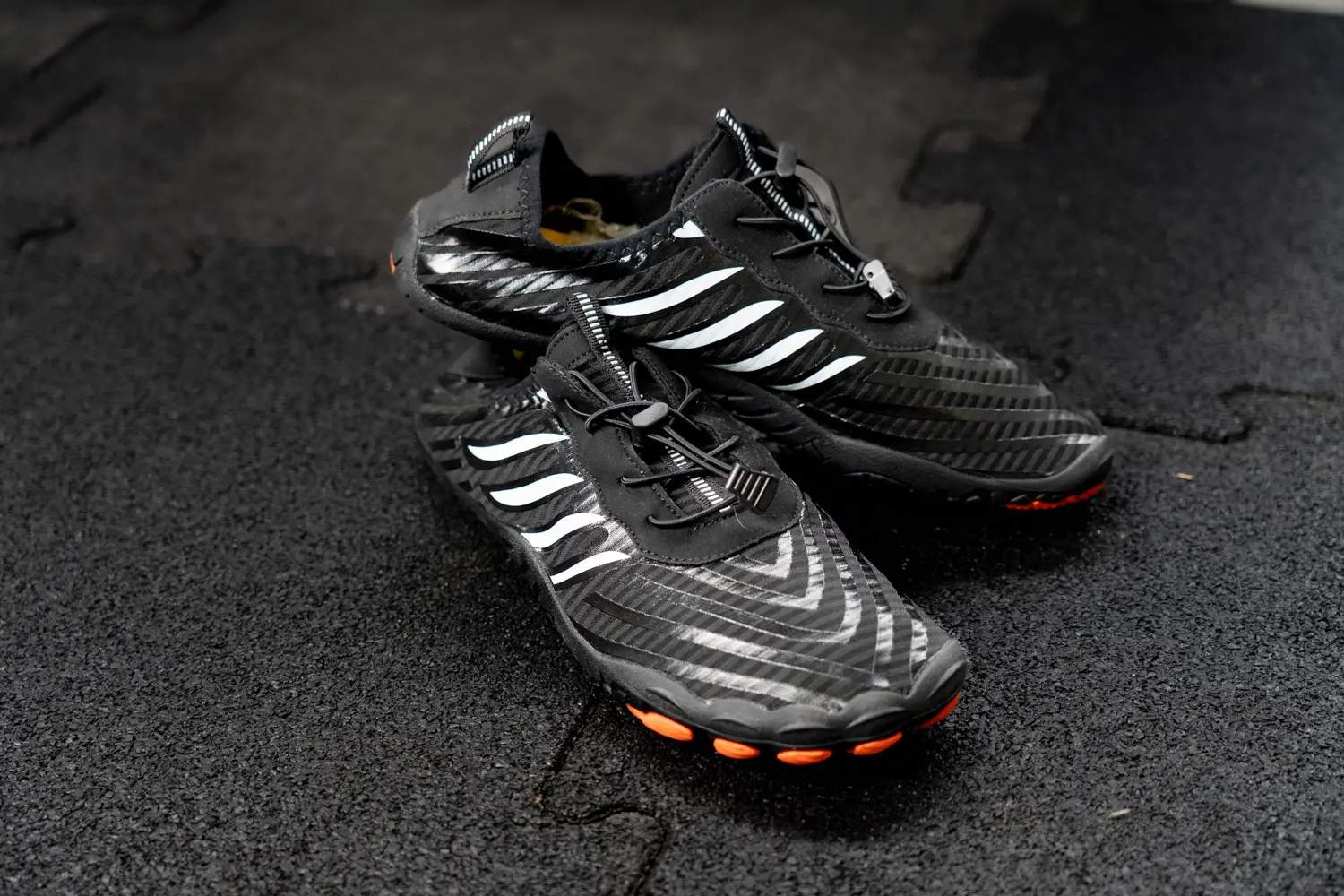
In recent years, minimalist shoes have become increasingly fashionable, and for good reason. On the one hand, minimalist shoes usually have a very thin sole without any footbed, which challenges the foot muscles. On the other hand, they are equipped with a wide toe box to offer the toes – especially the big toe – enough space. Visually, this may take some getting used to at first, but there are now many different companies offering visually appealing minimalist shoes for every taste.
Barefoot shoes are perfectly suited for strength training, but like other shoes without an insole, this is with the condition that your foot arch is strong enough to maintain stability and thus the leg axis.
Weightlifting Shoes
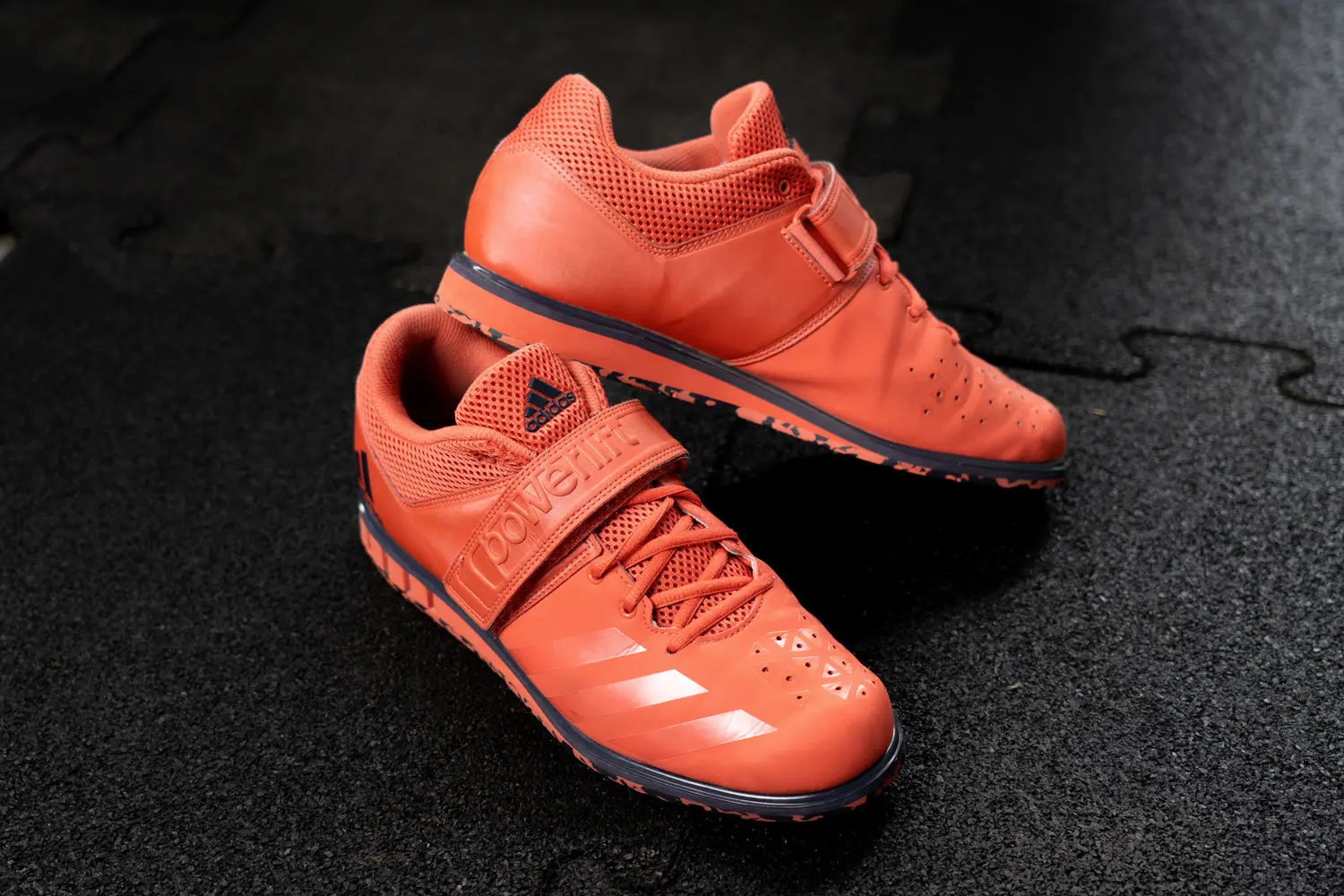
Weightlifting shoes offer a wide and flat sole that allows for stable positioning when standing. Additionally, the sole is equipped with a raised heel to allow for better knee forward travel and thus a more upright torso during the squat. The more upright torso, in turn, allows for reaching a deeper position in the squat before the spine in the lower back de-arches, meaning it rounds – the well-known butt wink.
For Olympic weightlifting and exercises derived from it, weightlifting shoes are virtually essential. These points also offer advantages for training in classic squats. However, those who don't want to spend money on these – admittedly not cheap – specialized shoes can be reassured: they are not absolutely necessary for classic strength training. A wedge or two weight plates under the heels are sufficient for most athletes.
Nevertheless, it must be said that weightlifting shoes are the first choice of shoes for squats.
Barefoot training
Training barefoot is a great thing for feet that are already strong enough. However, for good reason, training without shoes is not allowed in most gyms, thus it's not a real alternative for most people. For those who can and are allowed to train barefoot and can keep their arch stable during squats without collapsing, training without shoes is highly recommended.
What should I do if my foot muscles aren't strong enough yet and my foot rolls inward?
For this case, it is generally recommended to walk barefoot a lot or to specifically train the foot muscles through exercises. Those who are used to shoes with soft, thick soles and want to switch to barefoot shoes or entirely to walking barefoot should definitely do so slowly and bit by bit. Otherwise, muscle soreness in the calves (or possibly also in the foot muscles) is pre-programmed.
For now, it can also make sense to use shoes that support the arch of your foot during squats. However, in the long run, your foot should become strong enough so that this is no longer necessary.
Conclusion:
The optimal footwear for your training depends on your foot stability and your training. For weightlifting exercises, weightlifting shoes are the first choice. For „conventional“ strength training, flat shoes like Converse or barefoot shoes are a very good choice. Running shoes or classic fitness shoes with soft soles are least recommended.
You have the right shoes but are still looking for the right training equipment! Then we have in our SHOP the right thing for you.
Bumper Plates
Ab 55,00 €