


Types of Kettlebells:
-
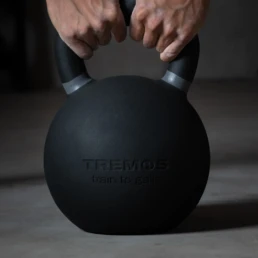
Cast Iron Kettlebells:
Cast iron kettlebells are available in weights ranging from 2 to 92 kg and get larger as the weight increases. These kettlebells come either with a painted finish (slightly more slippery) or with a non-slip powder coating. It’s also important to note that the kettlebell and its handle are cast as a single piece, rather than the handle being welded on separately. Some fitness kettlebells are filled with cement and are sometimes covered with neoprene or vinyl to protect the floor.
-
Competition Kettlebells
These kettlebells are available from 8 to 48 kg, and all weight classes have exactly the same standardized size. These kettlebells are particularly well-suited for dynamic exercises such as cleans or snatches and are also used in Kettlebell Training used.
When it comes to competition kettlebells, there are two basic types of balls:

Kettlebells that are filled from the bottom (usually with a mixture of concrete and iron scraps) and are hollow at the top. These balls can start to „rattle“ over time if individual parts become loose inside the ball.

2. Kettlebells that are hollow inside (and usually have a hole in the bottom) and where the wall thickness increases as the weight increases. With these kettlebells, the center of gravity is closer to the handle, making them perfect for all dynamic exercises such as the clean, snatch, and, of course, kettlebell juggling. Although these kettlebells are the most expensive, they are virtually indestructible.
One more important note about chrome-plated handles: Some manufacturers use chrome-plated handles, which provide an excellent grip when your hands are dry (almost too good, as your skin can crack), but as soon as your hands get damp from sweat, the grip changes abruptly and the handle becomes very slippery. Uncoated handles are better, as they offer a better grip.

-
Kettlebells made of other materials:
In addition to the two mentioned above, there are also plastic kettlebells filled with cement or sand. These kettlebells are not recommended for serious training over a longer period. They can cause pain in the forearm and become very large.
Lately, you've also been seeing more and more bags with handles that are filled with sand. Apart from swings and perhaps one or two other exercises, the applications for these products are very limited, and they have little to do with a kettlebell.
-
Kettlebells that are loaded with standard weight plates:
This is just a bar with a handle and not a kettlebell in the traditional sense. This type of „kettlebell“ is only suitable for swings.
-
Adjustable Kettlebells
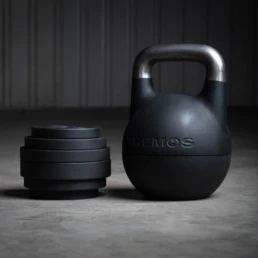
Adjustable kettlebells are another option that allows you to train with different weights without having to buy multiple individual kettlebells. These kettlebells feature a mechanism that allows you to quickly and easily adjust the weight by adding or removing additional weight. While adjustable kettlebells are practical and can save space, there are some limitations to consider.
Adjustable competition kettlebells are the best choice in this regard, as they maintain the exact size and shape of a standard kettlebell. This is crucial for the correct execution of exercises and adherence to competition standards. Other types of adjustable kettlebells, especially those with unusual shapes or sizes, can compromise movement patterns and increase the risk of injury. Therefore, when considering an adjustable kettlebell, it is advisable to opt for a model that maintains the shape and size of a standard kettlebell, especially if you are considering serious kettlebell training or competitions. Take a look at here just our Adjustable Competition Kettlebells one.

The Benefits of Cast-Iron Kettlebells:
- Something cheaper The lower price is likely the biggest advantage of cast iron dumbbells.
- Space-saving Of course, this argument only applies up to a certain size. That’s because really heavy cast-iron kettlebells are significantly larger than competition kettlebells.
- For the so-called Grinds (Turkish Get-Up, Strict Press, Squats) are recommended.
- Partially wider grip: When doing many swings, the wider grip can be advantageous with heavier cast iron balls compared to competition kettlebells.
- starting from 2 kg (only recommended for infants) and up to Available in 92 kg, This means there are virtually no limits to the training.
The disadvantages of cast iron kettlebells:
- Slightly different technique: Due to the different size depending on the weight, the technique for dynamic exercises is always slightly different.
- Each ball rests on a different spot on the forearm.

The advantages of Competition Kettlebells:
- One size fits all The most obvious and important feature of competition kettlebells is their uniform size.
- All balls are accordingly also equally high.
- Because of its uniform size, the ball rests in the same position regardless of its weight always on the forearm.
- Standard for the sport of Girevoy
- Technology for Clean, Snatch,... remains the same regardless of weight.
- Perfectly suited for dynamic exercises how to Clean, Jerk and Snatch or also Kettlebell juggling.
- Excellent center of gravity (especially with the hollow kettlebells), resulting in perfect "flight characteristics.".
- Nicely colorful 😉
The downsides of competition kettlebells:
- The only real disadvantage of competition kettlebells is the a slightly higher price —although this is put into perspective when you consider that good kettlebells last a lifetime.

Advantages of adjustable kettlebells:
- Space-saving Adjustable kettlebells offer the possibility to train with different weights without needing a large collection of individual kettlebells. Adjustable kettlebells can be a very good solution, especially for training at home in the living room.
- Cost-effective: Compared to buying multiple individual kettlebells, adjustable models are a very cost-effective option. For example, if you can get an adjustable kettlebell from 12 to 32 kg for under €300, all the kettlebells (in 2 kg increments) would cost €1,200 or more, depending on the manufacturer.
Disadvantages of adjustable kettlebells:
- Time commitment for weight change: Even though the time it takes to change weights is minimal, under a minute, athletes who need multiple different weights for their kettlebell training per workout will likely opt for kettlebells with fixed weights.
- With some manufacturers, the shape varies depending on the weight: The adjustable kettlebells from some manufacturers change shape depending on the weight. This doesn't make much of a difference for exercises like deadlifts or rows, but it makes classic kettlebell exercises like the clean or snatch impossible.
Why it's often better to spend a little more money upfront:
When buying kettlebells, it's important to consider that there are significant quality differences. Cheap kettlebells, especially those made from inferior materials like plastic, can have uneven weight distribution, making many exercises at best uncomfortable and at worst impossible for a proper workout. Additionally, the lifespan of such kettlebells is very limited. In contrast, there are few items that last longer than a cast-iron kettlebell – these typically last for several generations and are therefore ultimately much cheaper. As is often the case: if you buy cheap, you buy twice.
What kettlebell weight should beginners use?
It's very difficult to make a general statement here, because strength levels vary greatly from person to person.
Correct Kettlebell Weight for Women
- Average 8 kg for upper body and 12 kg for lower body
- Stark: 12-16 kg for the upper body and 16-20 kg for the lower body
Correct kettlebell weight for men:
- Average 12 kg for upper body, 16-20 kg for lower body
- Stark: 16-20 kg for upper body, 20-24 kg for lower body
Conclusion:
In summary, a kettlebell should be made of iron, not another material, for good training and long durability. Whether you choose a fitness, competition, or adjustable kettlebell depends on your preferences, budget, and available space.
Hopefully, this article has given you an overview of the world of kettlebells.
The best kettlebells for your training:
Cast iron kettlebell
Ab 222,00 €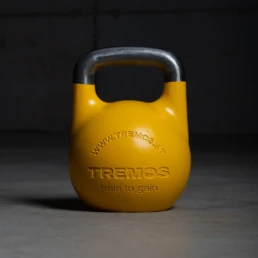
Competition Kettlebells
Ab 65,00 €

The benefits of plyometric training
Plyometric training is often neglected in training planning or only used in elite sports. However, a large number of high-quality studies show that jump training...


Yes, you can build muscle with kettlebells.
Muscle building – or hypertrophy, as it's known in technical terms – is a complex process that involves a variety of factors. Whether you can build muscle with kettlebells…

Kettlebell Color Codes – What They Mean
Competition kettlebells are not only standardized in their shape and size (and exactly the same from 8 to 48), but there is also from the kettlebell sport tradition a...

The Biomechanics of the Kettlebell Swing
The Kettlebell Swing is THE quintessential kettlebell exercise and also forms the basis for many other kettlebell exercises such as the clean and the snatch.